
Battery & USB Testers
Testing battery capacity, analyzing USB charging protocols, and diagnosing power delivery failures requires instruments that capture complete charging profiles with millisecond precision across all modern standards. ATORCH Battery & USB Testers combine fast charging analysis with capacity measurement, internal resistance testing, and PD3.1 protocol verification in portable instruments trusted by battery specialists and technicians worldwide. Order the complete lineup from the official store today to access the best price on charging analysis equipment.


ATORCH Battery & USB Testers for Complete Charging Analysis
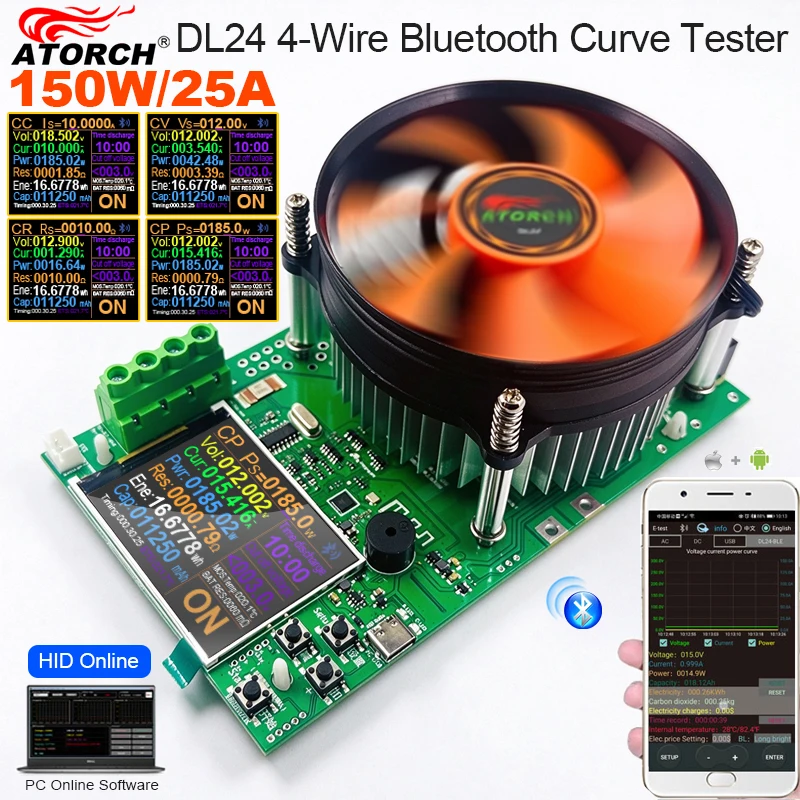
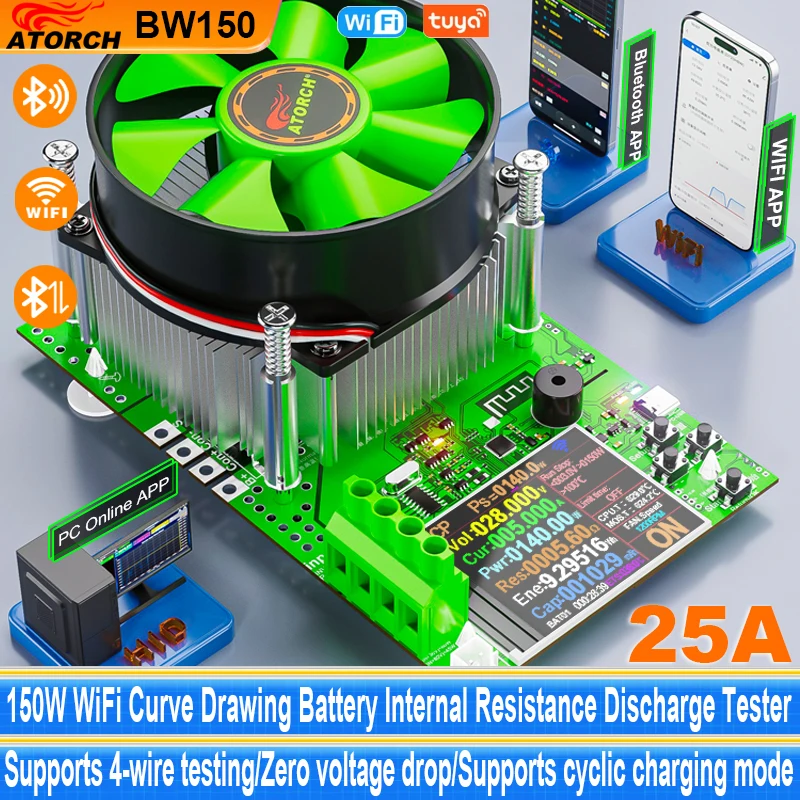
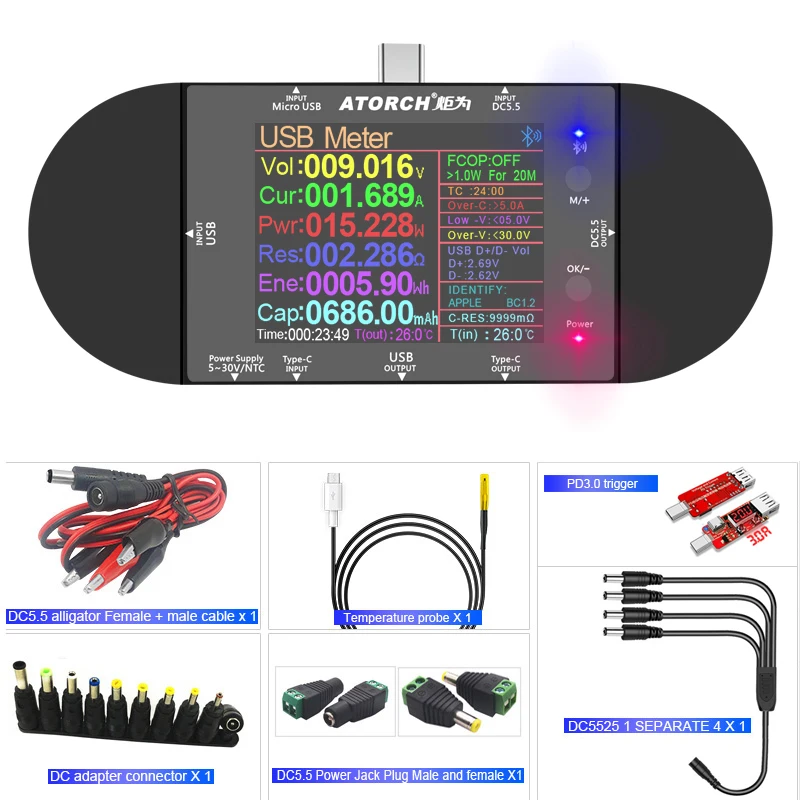
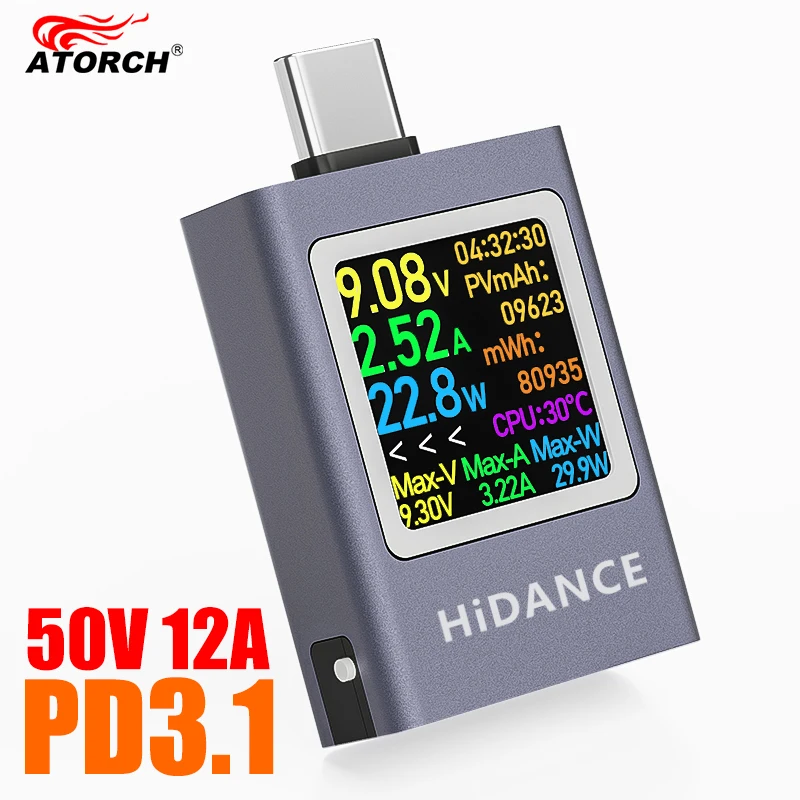
ATORCH Battery & USB Testers measure battery capacity in milliamp-hours with programmable electronic load capability, enabling precise capacity determination across lithium-ion, lithium polymer, and alkaline cells spanning 0.1mAh to 99,999mAh range. Fast charging analysis captures voltage and current profiles through USB-A, USB-C, and proprietary connectors, displaying power delivery wattage, charge time curves, and thermal behavior throughout the complete charging cycle. Internal resistance measurement to 0.001 ohm reveals battery health degradation and identifies cells approaching end-of-life service boundaries before failure causes device shutdown. PD3.1 protocol verification confirms compliance with USB Power Delivery specifications up to 240W, validating charger implementations and detecting non-standard power supplies that violate electrical safety standards. Lithium battery discharge testers apply configurable load currents from 1mA to 50A, measuring voltage sag behavior and identifying capacity loss patterns characteristic of specific degradation mechanisms. The LCD display shows simultaneous voltage, current, power, and accumulated energy with resolution to 0.01V and 0.001A, enabling visibility into transient charging behavior that average meter readings would obscure. Real-time graphing captures entire charging profiles, storing multiple test cycles for comparison and trend analysis across battery lot variations or equipment firmware updates.
Advanced Measurement Capabilities and Programmable Load Features
Programmable electronic load functionality enables testing of power supplies, chargers, and voltage regulators under simulated load conditions ranging from light drain to maximum rated capacity, revealing thermal stability and regulation accuracy. Constant current, constant power, and resistance mode operation covers diverse testing scenarios including battery discharge simulation, charger output validation, and load line characterization for power supply design verification. Multiple test profiles can be stored and executed sequentially, automating battery cycling for capacity benchmarking and accelerated life testing without operator supervision. Data logging captures measurements at 1Hz sampling rate throughout multi-hour discharge cycles, creating comprehensive CSV export files for analysis in spreadsheet applications and custom test software. Temperature monitoring through external thermocouple input correlates thermal behavior with electrical performance, revealing heat generation issues during fast charging that indicate internal resistance problems. Voltage and current limiting protections prevent test equipment damage from battery short circuits or reversed polarity connections, extending instrument lifespan through years of field testing. The USB-C and USB-A connectors support both power delivery analysis and traditional charging port testing, covering legacy and next-generation mobile device standards within single instrument.
Why Battery & USB Testers Outperform Single-Function Meters
Dedicated battery testing instruments measure capacity with better accuracy than generic multimeters because they apply precisely controlled discharge currents that simulate real device operating conditions. ATORCH testers eliminate guesswork in charger selection by measuring actual power delivery to smartphones, tablets, and laptops, confirming whether third-party chargers meet manufacturer specifications or violate safety margins. Internal resistance measurement reveals battery degradation invisible to simple voltage testing—cells showing rising internal resistance will fail under load despite normal no-load voltage readings. USB Power Delivery verification confirms that chargers implement correct protocol handshakes, preventing device damage from chargers that supply incorrect voltage or maximum current beyond device capability. Lithium battery discharge profiling identifies capacity losses too subtle for visual inspection, enabling proactive battery replacement before capacity drops below acceptable service thresholds. Real-time wattage display allows technicians to calculate actual charging efficiency, identifying power supplies that waste energy as heat rather than transferring it to battery storage. The combination of fast charging analysis and battery discharge testing in one device eliminates the need to purchase separate instruments, reducing cost and bench space while improving troubleshooting workflow efficiency.
Practical Testing Applications and Selection Guidance
Battery testing specialists rely on ATORCH testers for capacity verification of replacement cells, ensuring quality control across supplier lots and detecting counterfeit batteries that misrepresent energy storage capacity. Electronics technicians use programmable load features to validate smartphone chargers, USB hubs, and power banks, confirming they deliver safe, compliant power before returning devices to customers. PD3.1 protocol verification enables laptop charger testing without connecting expensive equipment to mains power, preventing component damage during commissioning of fast charging systems. DIY electronics enthusiasts employ internal resistance measurement to assess salvaged batteries from old laptops and power tools, determining whether cells retain sufficient health for re-use in hobby projects. Start with basic USB-A and USB-C capacity testing if your primary focus is smartphone and tablet charger verification; upgrade to internal resistance and programmable load capability if your work includes battery pack refurbishment or power supply diagnostics. The official store provides detailed comparison charts, application guides, and video tutorials explaining specific testing workflows for different device types and battery chemistries. Order online now to receive complete test leads, protective carrying case, USB cables, and full manufacturer warranty on fast charging analysis instruments.